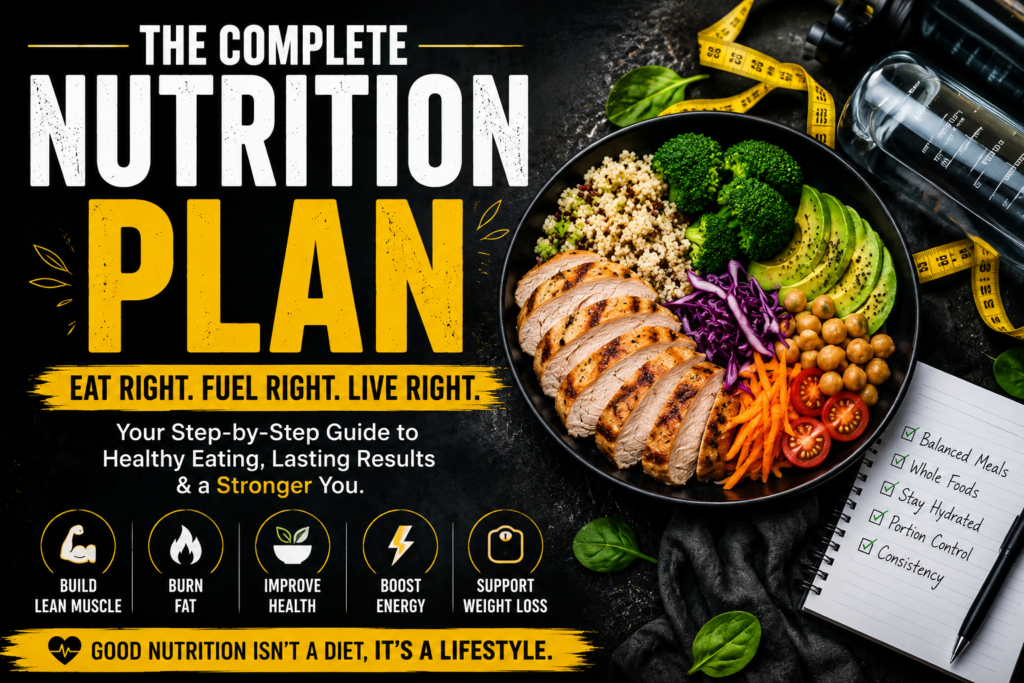
The Complete Nutrition Plan Guide: Fuel Your Body for Better Health and Fitness
Introduction
No matter what your fitness goal is—losing fat, building muscle, improving athletic performance, or simply living a healthier lifestyle—nutrition plays the most important role. You cannot out-train a poor diet. Even the best workout routine will produce limited results if your body isn’t receiving the nutrients it needs.
A proper nutrition plan isn’t about following strict diets or eliminating your favorite foods. Instead, it’s about creating balanced eating habits that nourish your body, support your goals, and are sustainable in the long run.
In this complete guide, you’ll learn how to build a healthy nutrition plan, understand macronutrients, choose the right foods, stay hydrated, and avoid common nutrition mistakes.
What Is a Nutrition Plan?
A nutrition plan is a structured approach to eating that provides your body with the right amount of calories and nutrients to support your health and fitness goals.
A good nutrition plan should:
- Provide enough energy for daily activities
- Supply essential vitamins and minerals
- Support muscle growth and recovery
- Help manage body weight
- Improve overall health
- Be practical and easy to follow
The best nutrition plan is one that you can maintain consistently.
Understanding Calories
Calories are units of energy that come from the food and drinks you consume. Your body uses these calories to perform every function, from breathing to exercising.
There are three key calorie levels:
Maintenance Calories
The number of calories needed to maintain your current body weight.
Calorie Deficit
Eating fewer calories than your body burns, which helps with fat loss.
Calorie Surplus
Eating more calories than your body burns, which supports muscle gain when combined with strength training.
Understanding your calorie needs is the first step in creating an effective nutrition plan.
The Three Macronutrients
Every balanced diet consists of three primary macronutrients.
Protein
Protein is essential for repairing tissues, building muscle, and supporting recovery after exercise.
Good protein sources include:
- Chicken breast
- Fish
- Eggs
- Paneer
- Greek yogurt
- Tofu
- Lentils
- Beans
- Whey protein
Aim to include a quality protein source with each meal.
Carbohydrates
Carbohydrates are your body’s preferred source of energy, especially during exercise.
Healthy carbohydrate choices include:
- Brown rice
- Oats
- Whole wheat bread
- Sweet potatoes
- Fruits
- Vegetables
- Quinoa
Choose mostly complex carbohydrates, which provide longer-lasting energy.
Healthy Fats
Healthy fats support hormone production, brain function, and the absorption of fat-soluble vitamins.
Excellent sources include:
- Avocados
- Almonds
- Walnuts
- Olive oil
- Chia seeds
- Flaxseeds
- Peanut butter (in moderation)
Healthy fats should be part of every balanced diet.
The Importance of Micronutrients
While macronutrients provide energy, micronutrients keep your body functioning properly.
These include:
- Vitamins
- Minerals
- Antioxidants
Eating a wide variety of colorful fruits and vegetables helps ensure you get the nutrients your body needs.
Build a Balanced Plate
A simple way to create healthy meals is to divide your plate into sections:
- Half the plate: Vegetables and salads
- One-quarter: Lean protein
- One-quarter: Whole-grain carbohydrates
- Add a small serving of healthy fats
This approach provides a balanced mix of nutrients without the need for complicated meal planning.
Stay Hydrated
Water is essential for digestion, nutrient transport, body temperature regulation, and exercise performance.
General recommendations:
- Drink 2.5–4 liters of water per day.
- Increase your intake if you’re active, exercising in hot weather, or sweating heavily.
Carry a reusable water bottle and sip throughout the day rather than waiting until you’re thirsty.
Meal Timing
Although total daily nutrition matters most, eating consistently can help with energy levels and recovery.
Consider:
- Eating breakfast if it suits your routine.
- Including protein in every meal.
- Having a balanced meal 2–3 hours before training.
- Eating a protein-rich meal after your workout to support recovery.
Find a meal schedule that fits your lifestyle and is easy to maintain.
Healthy Snacks
Nutritious snacks can help you stay full between meals.
Great options include:
- Greek yogurt with fruit
- Mixed nuts
- Boiled eggs
- Cottage cheese
- Apple with peanut butter
- Roasted chickpeas
- Protein smoothie
Choose snacks that combine protein, healthy fats, or fiber for better satiety.
Foods to Limit
No food needs to be completely banned, but some should be enjoyed in moderation.
Try to limit:
- Sugary drinks
- Deep-fried foods
- Highly processed snacks
- Excess sweets
- Fast food
- Refined grains
The goal is balance, not perfection.
Common Nutrition Mistakes
Avoid these common errors:
- Skipping meals regularly
- Eating too little protein
- Not drinking enough water
- Following extreme fad diets
- Ignoring portion sizes
- Relying heavily on supplements
- Eating mindlessly while distracted
- Expecting instant results
Consistency with healthy habits is far more effective than short-term restrictions.
Sample One-Day Nutrition Plan
Breakfast
- Oatmeal topped with berries and nuts
- Two boiled eggs
- Glass of milk or a cup of Greek yogurt
Mid-Morning Snack
- Apple
- Handful of almonds
Lunch
- Grilled chicken or paneer
- Brown rice
- Mixed vegetables
- Salad
Afternoon Snack
- Greek yogurt
- Banana
Dinner
- Grilled fish, tofu, or lentils
- Sweet potato
- Steamed broccoli and carrots
Evening Snack (Optional)
- Cottage cheese or a protein shake
Adjust portion sizes based on your calorie and activity needs.
Do You Need Supplements?
Supplements can be useful in some situations, but they should complement—not replace—a healthy diet.
Common supplements include:
- Whey protein (to help meet protein needs)
- Creatine monohydrate (to support strength and performance)
- Vitamin D (if recommended by a healthcare professional)
- Fish oil (if your diet is low in omega-3 fats)
Always prioritize whole foods first.
Tips for Long-Term Success
Building healthy eating habits takes time. These strategies can help you stay consistent:
- Plan your meals ahead of time.
- Keep healthy snacks available.
- Cook more meals at home.
- Read nutrition labels.
- Practice portion control.
- Enjoy treats occasionally without guilt.
- Stay physically active.
- Focus on progress rather than perfection.
Small, sustainable habits create lasting results.
Final Thoughts
A successful nutrition plan isn’t about strict rules or temporary diets—it’s about giving your body the fuel it needs to thrive. By eating a balanced mix of protein, carbohydrates, healthy fats, fruits, and vegetables, staying hydrated, and practicing consistency, you can support your fitness goals while improving your overall health.
Whether your goal is fat loss, muscle gain, or simply feeling more energetic each day, remember that nutrition is the foundation of every successful fitness journey. Start with small changes, stay patient, and build habits that you can maintain for life. Over time, these consistent choices will lead to stronger health, better performance, and lasting results.