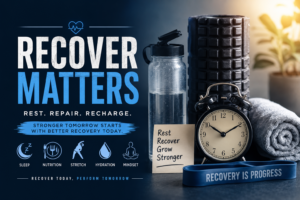

Recover Matters: Your Complete Guide to Recovery for Better Fitness Results
Recovery is one of the most overlooked aspects of fitness. Many people believe that spending more hours in the gym automatically leads to better results. In reality, your body doesn’t become stronger while you’re lifting weights—it becomes stronger during recovery. Whether your goal is building muscle, losing fat, improving athletic performance, or simply staying healthy, recovery plays a crucial role in helping you reach your fitness goals.
In this guide, we’ll explore why recovery matters, the science behind it, and the best strategies to help your body recover effectively.
What Is Recovery?
Recovery is the process through which your body repairs damaged muscle fibers, replenishes energy stores, restores hormonal balance, and prepares itself for your next workout.
Every exercise session creates tiny tears in your muscles. These microscopic tears are completely normal and are essential for muscle growth. During recovery, your body repairs these fibers, making them stronger and more resilient than before.
Without adequate recovery, your body never gets the chance to fully rebuild, increasing the risk of fatigue, injuries, and stalled progress.
Why Recovery Matters
Many fitness enthusiasts focus solely on training intensity while ignoring recovery. However, recovery is just as important as your workouts.
Proper recovery helps you:
- Build lean muscle more efficiently
- Improve overall strength and endurance
- Reduce muscle soreness
- Prevent injuries
- Restore energy levels
- Improve flexibility and mobility
- Boost athletic performance
- Support healthy hormone production
- Maintain motivation and consistency
Think of recovery as the bridge between today’s workout and tomorrow’s progress.
Signs You’re Not Recovering Properly
If your body isn’t getting enough time to recover, it will often show warning signs.
Common symptoms include:
- Constant muscle soreness
- Feeling tired even after sleeping
- Decreased workout performance
- Lack of motivation
- Poor concentration
- Frequent illnesses
- Difficulty sleeping
- Increased resting heart rate
- Joint pain
- Mood swings or irritability
Ignoring these signs may eventually lead to overtraining syndrome, which can take weeks or even months to recover from.
The Different Types of Recovery
1. Passive Recovery
Passive recovery involves complete rest with little or no physical activity.
Examples include:
- Sleeping
- Relaxing
- Taking a full rest day
- Meditation
This type of recovery allows your nervous system and muscles to fully recharge.
2. Active Recovery
Active recovery involves light physical movement that promotes blood circulation without placing additional stress on the body.
Examples include:
- Walking
- Cycling at low intensity
- Gentle swimming
- Yoga
- Stretching
Active recovery can help reduce stiffness and improve muscle recovery.
Sleep: The Most Powerful Recovery Tool
Sleep is where most recovery happens.
During deep sleep, your body releases growth hormone, repairs muscle tissue, strengthens the immune system, and restores energy.
Adults should aim for 7–9 hours of quality sleep each night.
Tips for better sleep:
- Maintain a consistent sleep schedule.
- Avoid screens before bedtime.
- Keep your bedroom cool and dark.
- Limit caffeine late in the day.
- Avoid heavy meals before sleeping.
Never underestimate the power of quality sleep.
Nutrition for Recovery
Proper nutrition speeds up recovery and prepares your body for future workouts.
Protein
Protein repairs damaged muscle tissue and supports muscle growth.
Excellent protein sources include:
- Chicken
- Eggs
- Fish
- Greek yogurt
- Cottage cheese
- Tofu
- Lentils
- Protein shakes
Aim to include protein in every meal.
Carbohydrates
Carbohydrates replenish glycogen stores that are depleted during exercise.
Healthy carbohydrate sources include:
- Rice
- Oats
- Sweet potatoes
- Whole grains
- Fruits
- Quinoa
Eating carbohydrates after training helps restore energy.
Healthy Fats
Healthy fats reduce inflammation and support hormone production.
Choose foods like:
- Avocados
- Nuts
- Seeds
- Olive oil
- Fatty fish
Hydration
Water is essential for muscle function and recovery.
Even mild dehydration can reduce performance and slow the recovery process.
Drink water consistently throughout the day and replace electrolytes after long or intense workouts.
Stretching and Mobility
Stretching improves flexibility and reduces muscle tightness.
Include:
- Dynamic stretches before workouts
- Static stretches after workouts
- Foam rolling
- Mobility exercises
Regular mobility work also helps prevent injuries and improve movement quality.
Rest Days Are Productive Days
Many people feel guilty about taking rest days.
The truth is that rest is part of the training process.
One or two rest days each week allow your muscles, joints, and nervous system to recover completely.
Remember:
Resting doesn’t mean you’re losing progress—it means you’re building it.
Stress Management
Physical stress isn’t the only type of stress your body experiences.
Mental stress increases cortisol levels, which may interfere with recovery and muscle growth.
Ways to reduce stress include:
- Meditation
- Deep breathing
- Journaling
- Spending time outdoors
- Listening to music
- Reading
- Spending time with family and friends
A healthy mind supports a healthy body.
Recovery Tools You Can Try
Many athletes use additional recovery methods to improve performance.
Popular options include:
- Foam rollers
- Massage guns
- Ice baths
- Contrast showers
- Compression garments
- Sports massage
While these tools can help reduce soreness, they should complement—not replace—good sleep, nutrition, and rest.
Common Recovery Mistakes
Avoid these common mistakes:
- Skipping rest days
- Sleeping too little
- Eating insufficient protein
- Not drinking enough water
- Training the same muscles every day
- Ignoring pain
- Overdoing cardio
- Neglecting mobility work
Small recovery mistakes can add up over time and slow your progress.
Sample Weekly Recovery Plan
A balanced week might look like this:
- Monday: Strength training
- Tuesday: Cardio + mobility
- Wednesday: Strength training
- Thursday: Active recovery (walking or yoga)
- Friday: Strength training
- Saturday: Light cardio and stretching
- Sunday: Full rest
This balance helps your body recover while maintaining consistent progress.
Final Thoughts
Recovery isn’t a break from fitness—it’s an essential part of it. Every workout challenges your body, but recovery is what allows you to adapt, grow stronger, and come back ready for the next session. By prioritizing quality sleep, balanced nutrition, proper hydration, active recovery, and regular rest days, you’ll improve your performance, reduce your risk of injury, and achieve better long-term results.
Instead of asking, “How hard should I train?” also ask, “How well am I recovering?” The answer to that question could make all the difference in your fitness journey.
Remember: Train hard, recover smarter, and let your body do the work behind the scenes.