Introduction
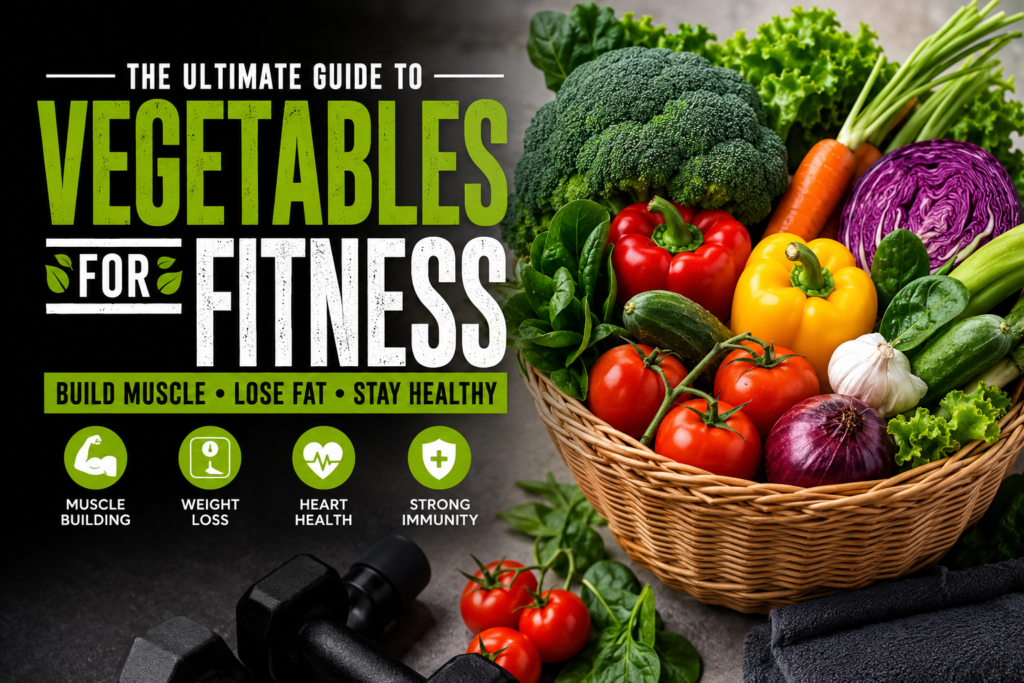
When people think about fitness, they often focus on protein, supplements, and workouts. However, one of the most powerful tools for improving your health and fitness is something much simpler—vegetables.
Vegetables are naturally rich in vitamins, minerals, antioxidants, and fiber while being low in calories. Whether your goal is to lose weight, build lean muscle, improve digestion, or maintain a healthy heart, vegetables should be a major part of your daily diet.
In this guide, you’ll learn why vegetables are essential for fitness, which vegetables are the healthiest, and how to include them in your meals.
Why Vegetables Are Important for Fitness
Vegetables provide nutrients that your body needs to recover from exercise, maintain energy, and support overall health.
Key Benefits
- Low in calories
- High in dietary fiber
- Rich in vitamins and minerals
- Improve digestion
- Help control blood sugar
- Support heart health
- Reduce inflammation
- Keep you full for longer
- Strengthen immunity
- Aid muscle recovery
Top 15 Best Vegetables for Fitness
1. Spinach
Spinach is considered one of the healthiest leafy greens.
Nutritional Benefits
- Rich in Iron
- Vitamin A
- Vitamin C
- Vitamin K
- Magnesium
- Folate
Fitness Benefits
- Supports muscle function
- Helps reduce fatigue
- Improves recovery
- Supports healthy blood circulation
Best Ways to Eat:
- Smoothies
- Salads
- Dal
- Stir fry
- Soup
2. Broccoli
Broccoli is often called a superfood.
Benefits
- High fiber
- Rich in Vitamin C
- Contains antioxidants
- Supports immunity
- Helps fat loss
Best Ways
- Steamed
- Stir-fried
- Soup
- Salad
3. Bell Peppers
Bell peppers are loaded with Vitamin C.
Benefits
- Improves skin health
- Boosts immunity
- Supports collagen production
- Rich in antioxidants
Colors Available
- Green
- Red
- Yellow
- Orange
4. Carrots
Carrots are rich in beta-carotene.
Benefits
- Healthy eyesight
- Better immunity
- Skin health
- Good snack option
5. Beetroot
Beetroot naturally contains nitrates.
Benefits
- Better endurance
- Improved blood flow
- Better workout performance
- Supports heart health
6. Cucumber
Perfect for hydration.
Benefits
- High water content
- Low calories
- Refreshing
- Helps digestion
7. Cabbage
Benefits
- High fiber
- Supports gut health
- Low calorie
- Great for salads
8. Cauliflower
Benefits
- Rich in Vitamin C
- Good fiber source
- Low carbohydrate
- Helps weight loss
9. Sweet Potato
Although technically not a typical vegetable in some classifications, it’s one of the best carbohydrate sources.
Benefits
- Slow-digesting carbohydrates
- High fiber
- Rich in potassium
- Great pre-workout food
10. Tomatoes
Benefits
- Rich in lycopene
- Supports heart health
- Powerful antioxidants
- Good for skin
11. Green Beans
Benefits
- Good fiber
- Vitamin K
- Low calorie
- Supports weight management
12. Mushrooms
Benefits
- Low calorie
- Contains Vitamin D (when exposed to sunlight)
- Supports immunity
- Good for muscle recovery
13. Pumpkin
Benefits
- Rich in Vitamin A
- High fiber
- Supports eye health
- Great for weight loss
14. Bottle Gourd (Lauki)
Benefits
- Easy to digest
- Hydrating
- Low calories
- Supports heart health
15. Okra (Bhindi)
Benefits
- Rich in soluble fiber
- Supports blood sugar control
- Good for digestion
- Heart-friendly
Best Vegetables for Weight Loss
If your goal is fat loss, prioritize these vegetables:
- Spinach
- Broccoli
- Cucumber
- Cabbage
- Cauliflower
- Bottle Gourd
- Bell Peppers
- Tomatoes
- Mushrooms
- Green Beans
These vegetables provide maximum nutrition while keeping calories low.
Best Vegetables for Muscle Building
While vegetables don’t contain large amounts of protein, they support muscle growth through vitamins and minerals.
Excellent choices include:
- Spinach
- Sweet Potato
- Broccoli
- Beetroot
- Mushrooms
- Bell Peppers
- Green Beans
Best Vegetables for Heart Health
Heart-friendly vegetables include:
- Spinach
- Beetroot
- Tomatoes
- Broccoli
- Bottle Gourd
- Okra
- Cabbage
These vegetables help support healthy cholesterol levels, blood pressure, and circulation.
Tips to Get Maximum Nutrition
- Eat a variety of colorful vegetables.
- Prefer steaming over deep frying.
- Avoid overcooking.
- Wash vegetables thoroughly.
- Include both cooked and raw vegetables.
- Aim for at least 3–5 servings daily.
Sample One-Day Vegetable Meal Plan
Breakfast
Vegetable oats with spinach, carrots, and bell peppers.
Mid-Morning Snack
Cucumber and tomato salad.
Lunch
Whole wheat roti, dal, broccoli, and spinach sabzi.
Evening Snack
Carrot sticks with homemade yogurt dip.
Dinner
Mixed vegetable stir fry with paneer or tofu.
Frequently Asked Questions (FAQs)
Which vegetable is best for weight loss?
Spinach, broccoli, cucumber, cabbage, and cauliflower are among the best choices because they are low in calories and high in fiber.
Can vegetables help build muscle?
Yes. While vegetables are not high in protein, they provide vitamins, minerals, and antioxidants that support muscle recovery and overall performance.
Should I eat vegetables before or after a workout?
Vegetables can be eaten at any time. Pair them with carbohydrates before a workout and with protein after a workout for balanced nutrition.
Are raw vegetables healthier than cooked vegetables?
Both have benefits. Raw vegetables preserve some heat-sensitive vitamins, while cooking can improve the absorption of certain nutrients like lycopene in tomatoes and beta-carotene in carrots.
How many vegetables should I eat daily?
Aim for at least 400 grams (about 5 servings) of vegetables each day as part of a balanced diet.
Final Thoughts
Vegetables are the foundation of a healthy fitness diet. They provide essential nutrients that support energy, muscle recovery, digestion, immunity, heart health, and sustainable weight management. By including a wide variety of colorful vegetables in your meals every day, you can improve both your fitness performance and your long-term health without relying on expensive supplements.
Remember: Protein builds muscles, carbohydrates provide energy, healthy fats support hormones—but vegetables keep your entire body functioning at its best.